
Sourcing natural ingredients effectively defines the ultimate success of any final product. Therefore, when searching for fruit pulp in Colombia, purchasing and development managers face technical challenges. Below, you will find key insights here for choosing the best fruit pulp.
We will analyze regulations, organoleptic differences, and specific storage criteria for your industry. This technical information allows you to make informed decisions, reduce waste, and guarantee quality in processed foods or beverages.
What is fruit pulp and what is it not
The food industry requires precise definitions to standardize recipes effectively. Technically, fruit pulp in Colombia is the edible part of the fruit, separated from peels and seeds. It must not ferment and maintains the sensory characteristics of fresh fruit (FreshFruitPortal, 2023).
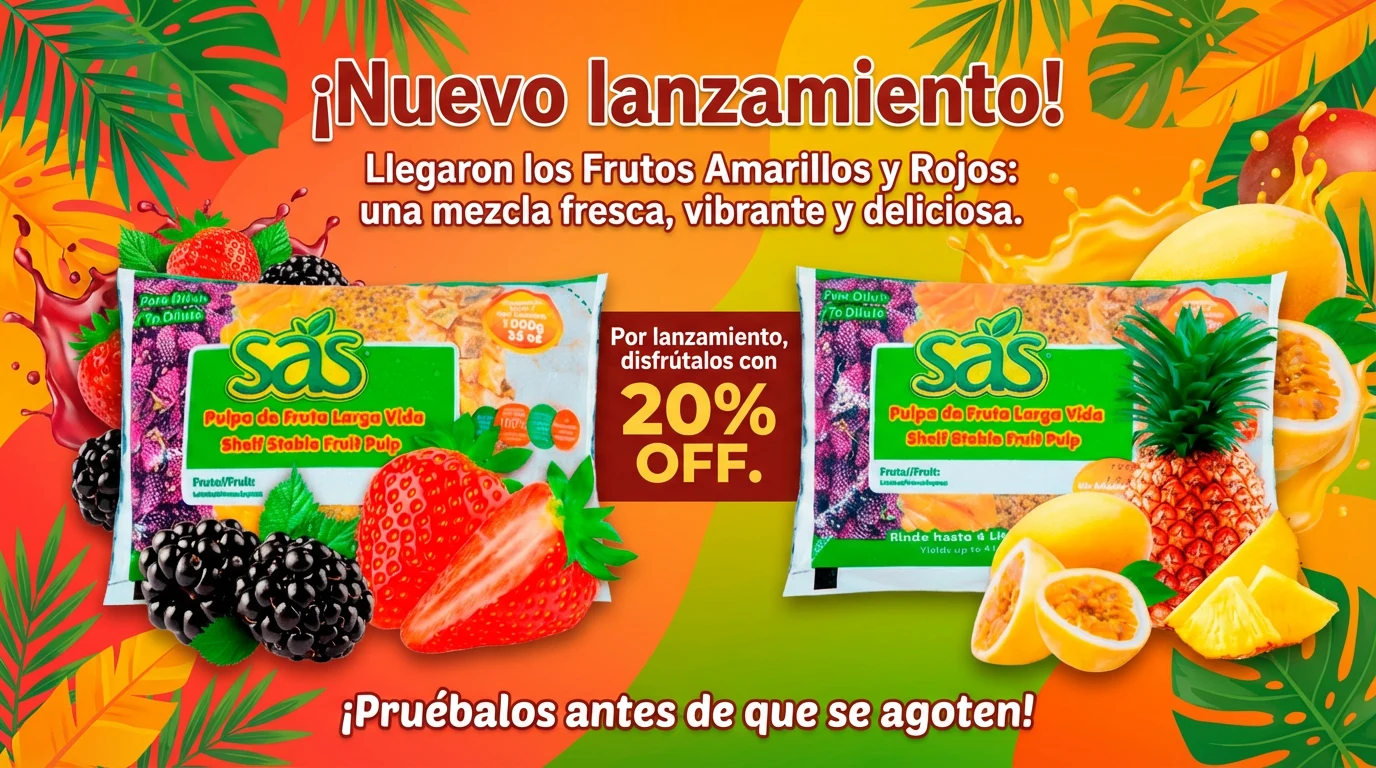
Distinguishing it from other derivatives is vital to avoid formulation errors in production. Many buyers confuse pulps with sugary bases, altering the nutritional profile and flavor of their products.
Pulp vs. juice and nectar
Differentiating these terms saves costs and adjustments in the plant. Below, the technical characteristics that distinguish each input are detailed:
- Pulp: Its fruit content is 100 %. It possesses a high or thick viscosity, and its main use is as a raw material or base ingredient.
- Juice: Although its content is 100 % fruit, its viscosity is totally liquid and is usually destined for direct consumption or clarified use.
- Nectar: Contains only between 18 % and 50 % fruit. Its viscosity is medium or low and is marketed as a final beverage with added water and sweeteners.
Common myths about damaged fruit and flavorings
There is a mistaken belief that pulp comes from discards. Export-quality fruit pulp in Colombia uses harvests at optimal maturity. Therefore, the color and aroma must be natural, without fermentation notes. To verify purity, check the ingredient list carefully. A premium pulp should not list “flavors identical to natural” or colorants, unless it is a specified mixture.
Differences that change the result in your business
Selecting the incorrect format affects the texture of an ice cream or beer turbidity. Furthermore, it usually has the Brix (natural sugar) of the origin fruit. The concentrate, conversely, has lost water through evaporation. This facilitates transport but can modify subtle aromatic notes due to aggressive thermal treatment:
- Viscosity impacts filling and mixing machinery. A fibrous pulp (like mango or pineapple) adds body to yogurts and smoothies, improving the perception of naturalness (“mouthfeel”).
- In terms of costs, concentrate yields more per transported liter. However, fruit pulp in Colombia offers a superior flavor profile, justifying its price in premium products.
When is fruit pulp in Colombia suitable?
Each application demands a distinct specification to optimize yield. Below, we describe the sectors where using this ingredient proves fundamental for commercial success:
- Ice cream: requires high solids and fiber to avoid crystallization of the final product.
- Mixology: prioritizes aromatic intensity and a balanced acidity for mixtures.
- Bakery: needs thermostable fillings that do not release water during baking.
- Juice bars: seek immediate freshness and a color that attracts the consumer.
Frozen fruit pulp vs. aseptic pulp
The decision between these formats depends on your current logistics infrastructure. In that sense, producers process mainly under these two technologies to serve local and foreign markets. Both methods guarantee safety but differ in handling and shelf life. Thus, understanding these variables ensures the continuity of your production line without unexpected stops.
Which option to choose?
If your warehouse lacks ample freezing chambers, the aseptic option is mandatory. Therefore, fruit pulp in Colombia in aseptic format allows storing large volumes at room temperature. This facilitates inventory management during demand peaks. Thus, buying long-life fruit pulp reduces the risk of loss due to electrical failures in refrigerators.
Shelf life, storage, and cold chain
Inadequate handling is the main cause of financial losses. It is a living product and sensitive to sudden thermal changes. Maintaining package integrity is crucial. Moreover, micro-breaks from bad manipulation allow oxygen entry, causing browning and strange flavors.
Good practices for storage and rotation
Organize your inventory management under the “First In, First Out” (FIFO) method. This prevents old batches of fruit pulp in Colombia from expiring at the back of the chamber. Monitor the temperature daily. In fact, fluctuations exceeding 5 degrees can initiate recrystallization processes in frozen pulps, affecting texture. Never defrost in the sun or with direct hot water. Thermal shock degrades vitamins and favors accelerated bacterial growth. The correct way is passing the product to refrigeration (4°C) 24 hours before. This ensures a smooth transition, maintaining the homogeneity of the pulp.
Operational checklist for kitchen and production
Implement simple controls for your reception and process team:
- Verify reception temperature (−18°C for frozen) with a calibrated thermometer.
- Check integrity of seals and packaging to rule out leaks.
- Disinfect the exterior packaging before opening to avoid physical contamination.
- Use all content or refrigerate the surplus immediately after opening.
Labeling and requirements in Colombia for products with pulp
Complying with the norm avoids sanctions and generates confidence. Strict resolutions from the Ministry of Health govern the commercialization of fruit pulp in Colombia. Labels are contracts of transparency. They must reflect exactly what the container holds, protecting both the producer and the final consumer. Resolution 5109 of 2005 establishes labeling requirements. It must include product name, batch, expiration date, ingredients, and manufacturer. For commercialization, declaring if it contains sulfites or additives is mandatory.
Traceability must be clear from origin to final packaging. Do not look only at the price. Compare the declared percentage of real fruit. Some economic products dilute pulp with water and thickeners. Verify the order of ingredients. The first mentioned is the most abundant; if it is sugar or water, discard that provider for high-quality applications.
How to choose a Fruit pulp in Colombia provider
A strategic partner guarantees stability in your formulas. The market for fruit pulp in Colombia is broad, but not all offer consistency batch to batch. The capacity for response regarding urgent orders is vital. Evaluate:
- The financial and operational solidity of your provider before signing annual contracts.
- Look for certifications like HACCP or ISO 22000. These guarantee that they processed it under international safety standards.
- Consistency is key. pH and Brix must remain stable throughout the year to not affect your final recipe.
Key questions for quoting
When contacting, be direct to filter options and optimize your time:
- What is the maximum monthly production capacity?
- Do they have updated technical sheets for every flavor?
- Do they manage safety stock for recurrent clients?
- What is the average lead time?
Always demand the technical sheet before the physical sample. This document reveals physical-chemical parameters (acidity, pH) crucial for your R&D department. Also, request certificates of microbiological analysis by batch. This shields your process against possible cross-contaminations coming from external raw materials.
Where to buy fruit pulp in Colombia and the USA?
Logistics of acquisition varies according to your current geographic location. Finding fruit pulp in Colombia proves simple due to the great local offer. However, exporting demands specialized channels and allies like Alimentos SAS. The volume of acquisition always determines the ideal channel for your business model.
- Small producers use distributors, while large industries negotiate directly with the Alimentos SAS plant.
- In Bogotá or Medellín, expert distributors exist to serve the Horeca sector.
- The price of fruit pulp in Colombia stands out due to proximity to cultivation zones.
- Digital platforms facilitate rapid comparison of current offers in the market.
- Even so, direct purchase at the factory ensures the best price and industrial freshness.
- To buy fruit pulp requires solid technical backing to manage large-scale volumes.
Most sought-after Latin flavors
The Anglo-Saxon market explores new profiles. For example, fruits like lulo, passion fruit, and soursop are trending in functional beverages and craft beers. These exotic flavors are usually seasonal. Secure contracts with providers that guarantee availability of long-life fruit pulp or frozen fruit pulp all year.
Alimentos SAS: your strategic ally in fruit pulp in Colombia
The consistency and quality of your inputs define your brand reputation. At Alimentos SAS, we understand the challenges of the modern food industry. As a producer and marketer of tropical fruit puree, we guarantee traceability and export standards in every batch.
Our processes ensure you receive the best of the Colombian field, whether in frozen or aseptic format. Values like honesty and service guide our relationship with purchasing and R&D managers. Visit Alimentos SAS and bring the true fruit pulp in Colombia to your products.
References
- Departamento Administrativo Nacional de Estadística. (2023). Encuesta Nacional Agropecuaria (ENA).
- Mordor Intelligence. (2023). Fruit Pulp Market Size & Share Analysis.
- U.S. Food and Drug Administration. (2024). Food Labeling & Nutrition.