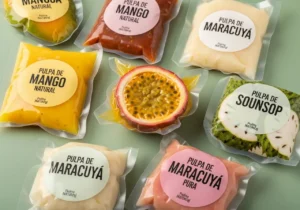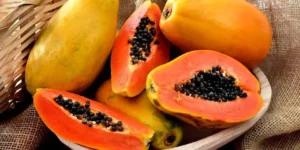

Without a doubt, understanding what is fruit pulp remains essential for any food company operating in today’s market. Specifically, we define it as the edible fruit part, separated from peel and seeds, processed to preserve flavor.
This valuable input facilitates industrial production by successfully standardizing flavor profiles effectively for consistent results. Therefore, if you seek to optimize processes with quality raw materials, continue reading to master this key concept.
Do you really know what is fruit pulp?
First, to technically define what is fruit pulp, we must view it as a completely non-fermented product. Manufacturers obtain it from the edible part of fresh, healthy, and ripe fruits found in nature.

Furthermore, this product undergoes rigorous processes ensuring safety without ever losing its distinct organoleptic characteristics. Consequently, it serves as the ideal base for industrial formulations that require authentic flavor and perfect consistency.
Pulp vs. puree vs. juice: what is the difference?
Although they appear remarkably similar, important technical nuances definitely exist between these popular product categories. Primarily, fruit pulp usually contains fiber and the fruit’s cellular structure, offering a much denser texture.
On the other hand, juice is the extracted liquid, generally lacking insoluble solids entirely in its final form. Conversely, making puree often implies significant cooking or finer sieving during the complex manufacturing process. However, in the industry, what is pulp and what is puree are sometimes used interchangeably, depending on thickness.
What is fruit pulp, and what are the available types
In this sense, when investigating what is fruit pulp, you will find diverse presentations adapted to specific logistical needs. Accordingly, below, we detail the most common variants for your business operations to consider today.
- Fresh pulp. Naturally, it represents the raw product, which workers extract either manually or mechanically for immediate usage. Unfortunately, this variant possesses a short shelf life and requires immediate refrigeration, making it less common.
- Pasteurized pulp. Specifically, this distinct type has received rigorous thermal treatment to ensure complete safety and stability. Such a process eliminates pathogens and extends its duration, effectively facilitating its handling in massive production lines.
- Frozen pulp. In addition, this specific option remains very popular in the retail sector and the dynamic hospitality industry. It maintains sensory properties almost intact thanks to the rigorous cold chain protocols applied constantly.
- Concentrated pulp vs. NFC. Typically, concentrated pulp eliminates water content to facilitate global transport logistics significantly for international shipping. Alternatively, NFC is pulp in its natural state, highly valued for its premium flavor profile.
How is the pulp obtained and processed?
Undoubtedly, correct industrial processing strictly defines the final product quality reached by the manufacturer consistently. Therefore, understanding this flow is vital to comprehending what is fruit pulp of high quality.
Extraction: peeling, coring, crushing, and sieving
First, workers wash and select the fruit carefully to ensure optimal hygiene standards before processing begins. Next, the product passes through specialized machines that efficiently remove the skin and all seeds. Finally, equipment crushes and sieves it to obtain a uniform texture completely free of impurities.
Treatments: pasteurization, packaging, freezing, and preservation
Subsequently, the product may frequently undergo rigorous pasteurization to guarantee total safety for all consumers. Afterwards, automated machines package it aseptically or freeze it quickly to maintain absolute freshness efficiently. Effectively, these methods preserve the characteristic color and vibrant aroma of tropical fruit pulp perfectly.
Quality control and food safety
Mandatorily, each batch must meet strict regulatory standards before market release to ensure compliance. Precisely, experts control Brix degrees, pH levels, and microbiology daily to verify consistent internal quality. Thus, we ensure the ingredient remains safe for the final consumer consumption at all times.
Uses and applications in the industry
Knowing what is fruit pulp opens a range of creative and commercial possibilities today. In fact, its inherent versatility makes it a star ingredient globally across multiple market sectors. Some of its uses include:
- In the food industry. Primarily, it is the base for juices, nectars, ice creams, jams, and yogurts produced everywhere. Also, it brings natural flavor and vibrant color to diverse dairy and beverage formulations effectively.
- In restaurants and confectionery. Frequently, professional chefs use it in complex recipes to enhance taste without complicated preparation steps. It facilitates the creation of sauces, pastry fillings, and cocktail bases without fresh fruit waste.
- Finally, at home. It allows preparing healthy smoothies, sauces, desserts, and bakery items quite easily. Uniquely, it offers the convenience of fruit ready to use at any moment for families.
Frequently asked questions about what is fruit pulp (FAQ)
Here, we clarify common doubts about this versatile input now to help you understand better. These are the following:
- Are fruits pulps and puree the same? Technically, they vary in viscosity and process, but commercially, people usually refer to the same product.
- What do I do with pulp after making juice? You can use the fibrous remnant to bake cookies or enrich soups, utilizing fiber.
- How is pulp processed industrially? Systematically, facilities select, wash, pulp, pasteurize, and package it carefully to ensure the best results. This guarantees a long shelf life and food safety for everyone involved in the chain.
Purchases and suppliers: how to choose commercial pulp
Finally, now that you are clear on what is fruit pulp, choosing the right supplier matters. Therefore, look for companies with quality certifications and strong export capacity to ensure complete reliability.
Certainly, a good supplier guarantees a constant supply and product standardization for your industrial production lines. At Alimentos SAS, we dedicate ourselves to producing long-life fruit pulps that meet international standards.
References
- ABC Fruits. (2024). What is fruit pulp? | Fruit pulp types | Uses of fruit pulp.
- Organización de las Naciones Unidas para la Alimentación y la Agricultura (FAO). (n.d.). Fichas técnicas de productos frescos y procesados.