
Soursop wins people over with its white, creamy, sweet-and-sour pulp, a combination that artificial flavorings rarely manage to imitate. Therefore, if you are weighing what to do with soursop pulp at your plant, the options go beyond juice.
This guide covers its main industrial applications, the technical variables that reshape a formulation, and how to choose a format. That way, you can decide what to do with soursop pulp based on sound criteria rather than trial and error.
What to do with soursop pulp in the food industry
Generally, food manufacturers use soursop pulp as a raw material for beverages, ice cream, yogurt, desserts, jams, jellies, and cocktails. Moreover, it adds flavor, aroma, and body, and it simplifies processes that demand peeling and seed removal with fresh fruit.
In fact, the scientific literature on processed soursop documents these applications, which range from beverages to frozen desserts. So, if you are wondering what to do with soursop pulp on your line, these are the most common uses:
- Fruit beverages. Juices, nectars, smoothies, shakes, and dairy drinks benefit from its sweet and slightly tart profile.
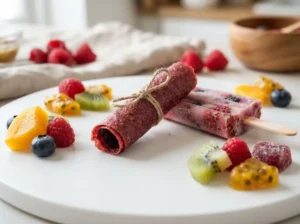
- Ice cream and frozen desserts. In ice cream, sorbets, and ice pops, the pulp delivers body and aroma to the final mix.
- Yogurt and dairy. Manufacturers use it in set yogurt, drinkable yogurt, and fruit preparations for the bottom of the cup.
- Desserts and baking. It works well in mousses, fillings, creams, and toppings for pastry and bakery production lines.
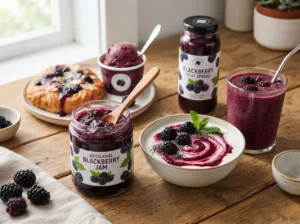
- Jams and jellies. These fruit preparations call for carefully controlled cooking times and textures in every production run.
- Sauces and fruit preparations. They act as sweet bases for desserts or as accompaniments within busy food service operations.
- Cocktails and specialty drinks. Bars, hotels, and restaurants use it as a base for drinks they prepare by the serving.
How can you use soursop pulp in the beverage industry?
Beverages represent the most direct application, although each format calls for a different adjustment during formulation. Thus, before defining what to do with soursop pulp in this category, it pays to review two key areas. The first involves the beverage base itself, while the second concerns blending the pulp with other fruits.
What to do with soursop pulp in juices and nectars
In juices and nectars, the pulp defines the flavor, body, and mouthfeel of the final drink. Since soursop is fibrous, the ratio of pulp to water affects both viscosity and stability. For this reason, it makes sense to set that ratio in pilot trials before moving into full-scale production.
Meanwhile, in smoothies, shakes, and dairy beverages, the pulp gives the drink a naturally creamy consistency. In these cases, you should monitor phase separation and adjust sweetness to match the profile your brand wants.
Also, for coffee shops, hotels, or restaurants that prepare juice by the serving, portioned kilo packs help control each service. By contrast, a beverage plant usually plans ingredient dosing around each full production batch it runs.
Which fruits pair well with soursop for beverage development?
Overall, soursop has a mild flavor that pairs nicely with fruits that offer more acidity or a stronger aroma. Indeed, researchers have evaluated pineapple, orange, and soursop blends for beverages, and these combinations make common starting points:
- Pineapple. It adds acidity and freshness, and it balances the natural sweetness of soursop in the blend.
- Orange. This fruit contributes bright citrus notes and gives the beverage a more vivid color overall.
- Mango. Its pulp reinforces the tropical profile and, in addition, strengthens the body of the finished beverage.
- Passion fruit. It adds a pronounced acidity that creates a pleasant contrast with the creaminess of soursop.
- Strawberry. It provides color as well as a fruity touch that works especially well in dairy-based beverages.
However, keep in mind that no combination works as a universal formula for every product or production line. That is, you should validate each ratio through testing, because the acidity and solids of each pulp change the final result. Consequently, deciding what to do with soursop pulp in blends always requires running your own in-house trials.
Can you use soursop pulp to make ice cream?
Yes, and it actually ranks among the best-documented applications within the entire frozen dessert category. That said, knowing what to do with soursop pulp in ice cream starts with understanding what the pulp brings to the formulation.
Specifically, in ice cream, sorbets, and ice pops, soursop contributes flavor, aroma, and body thanks to its fiber. Even so, its water and natural sugar content means you must review these variables before production begins:
- Solids. They determine both the creaminess of the final product and its overall resistance to melting.
- Water. Its content influences the size of the ice crystals that form during the freezing stage.
- Texture. The fiber in the pulp can create a denser or grainier sensation on the palate.
- Sweetness. You need to adjust the sugar in the mix to account for the fruit’s natural contribution.
- Acidity. Although mild, it changes how consumers perceive the sweetness and aroma of the final product.
- Stability. Your team should evaluate how color and flavor hold up throughout the entire frozen storage period.
Can you use soursop pulp to make yogurt?
Yes, researchers have formulated yogurt with soursop pulp in experimental studies, which supports its use in dairy. If you are analyzing what to do with soursop pulp in this category, keep three key areas in mind.
First, in set yogurt, manufacturers usually blend the pulp in or layer it at the bottom of the cup. In drinkable yogurt, however, the fruit’s fiber requires careful control of viscosity and homogenization throughout processing.
Second, regarding texture, the pulp can thicken the mixture and change the mouthfeel of the yogurt. The fruit’s acidity also adds to the yogurt’s own acidity, so testing on a small scale makes sense.
Finally, for fruit-on-the-bottom dairy, you can turn the pulp into a preparation with sugar and stabilizer. In any case, that base must withstand packaging and refrigerated shelf life without separating or losing its aroma.

What advantages does soursop pulp offer over fresh fruit?
To begin with, fresh soursop requires peeling, seed removal, and pulping, which are tasks that consume both time and labor. That is why, before deciding what to do with soursop pulp, it is worth reviewing these advantages:
- Simpler processing. The pulp arrives ready for dosing, so your plant can skip peeling and pulping entirely.
- Less handling. Your team has less contact with the fruit and, consequently, fewer sanitary control points to manage.
- Year-round availability. Production schedules no longer depend on the harvest season, so your plant can operate all year.
- Standardized raw material. Flavor and texture vary far less between batches than they do with fruit from different harvests.
- Less waste. You avoid losses from damaged fruit, peels, and seeds that your team would otherwise have to discard.
- Easier planning. With clearly defined formats, purchasing and production teams can calculate their volumes with greater precision.
Frozen or shelf-stable soursop pulp?
In reality, no format is universally superior, since the choice depends on your process, volume, storage, logistics, and production frequency. To help you compare, the following table summarizes the key differences between these two options at a glance:
| Criterion | Frozen pulp | Shelf-stable pulp |
|---|---|---|
| Preservation | Freezing and cold chain | According to product specifications |
| Ideal for | Plants with cold storage infrastructure | Operations that prioritize simple logistics |
| Dosing | Portioned kilo packs | Depends on the presentation |
| Consideration | Do not break the cold chain | Check shelf life once opened |
If your plant already works with cold storage, frozen soursop pulp in portioned kilo packs makes weighing each batch easier. Alternatively, ask Alimentos SAS about the presentations available for your specific application if you need another option.
Defining what to do with soursop pulp also means knowing how to store it properly in your facility. So, how should you store soursop pulp to preserve its quality throughout its entire shelf life? Always follow the product’s technical data sheet, and apply these basic precautions as part of your routine:
- Storage. Maintain the temperature that the data sheet specifies, and rotate your inventory based on each lot’s date.
- Cold chain. Avoid any interruptions in temperature control during transportation and while receiving shipments at your plant.
- Thawing. Thaw the pulp under refrigeration, and only thaw the exact amount you actually plan to use.
- Refreezing. As a general rule, avoid refreezing, and always confirm the instructions on the technical data sheet.
How to develop products with soursop pulp on an industrial scale
Taking an idea from the lab to the production line requires a clear method and careful planning. For R&D teams, deciding what to do with soursop pulp on an industrial scale usually follows these steps:
- Define the application. Start by establishing the product type, the sales channel, and the shelf life you expect to achieve.
- Select the right pulp. Next, carefully review the composition, physicochemical characteristics, aroma, flavor, format, and storage conditions of each option.
- Run formulation trials. After that, test different ratios of pulp, sugar, and stabilizers on a small scale in your lab.
- Evaluate stability and sensory profile. Once you have a promising formula, measure texture, color, aroma, and flavor throughout the storage period.
- Validate the production process. Confirm that the formula behaves the same way on your plant equipment as in the lab.
- Standardize the formula. Finally, document quantities, processing times, and controls so your team can replicate every batch consistently.
Throughout the process, one key question stands out: does the pulp you are buying suit the application you want to develop? If the answer is yes, the rest of the journey becomes much shorter for your entire R&D team.
Soursop pulp from Alimentos SAS for industrial use
At Alimentos SAS, we have produced fruit pulps and nectars since 1981, with ISO 22000, HACCP, and KOSHER-certified processes. In addition, we have earned a favorable assessment from the FDA and INVIMA for domestic and international markets.
Our pulps comply with Resolution 3929 of 2013, which sets sanitary requirements for fruits and beverages containing pulp. As a result, you receive a raw material with clear controls from its origin onward.
If you are wondering where to buy soursop pulp for production, at Alimentos SAS, we offer frozen soursop pulp. It comes in portioned kilo packs, a practical presentation that makes dosing at the plant much simpler. Moreover, it provides a solid base if you are still defining what to do with soursop pulp across several lines.
Have you already decided what to do with soursop pulp in the next product your team develops? Contact the Alimentos SAS team today and request technical information to support your upcoming formulation trials.
References
- Universidade Federal do Pará. (2023). Soursop (Annona muricata) properties and perspectives for integral valorization. Foods, 12(7), 1448.
- National Library of Medicine. (2024). Optimization of thermoultrasound process of soursop (Annona muricata) nectar and comparison of its physicochemical properties and in vitro bioaccessibility of antioxidants with pasteurized sample. PubMed Central.