

Choosing the right raw materials is the foundation of excellence in the food and beverage industry. Finding fruit pulp suppliers who understand the technical needs of a production line is a challenge that takes rigor and know-how. A low-quality ingredient doesn’t just compromise the final flavor; it can also create food-safety risks and drive-up operating costs. That’s why this guide explains how to choose fruit pulp suppliers with a professional lens: criteria to evaluate, compare, and request quotes without falling for the lowest-price trap.
What to define before learning how to choose fruit pulp suppliers
Before you reach out to potential partners, it’s essential to understand that pulp isn’t just mashed fruit, it’s a technological input. Defining the exact parameters up front prevents slow quoting cycles and supply errors.
Product type: frozen vs. aseptic pulp
The choice between the two directly affects your cost structure and logistics. Here’s the breakdown:
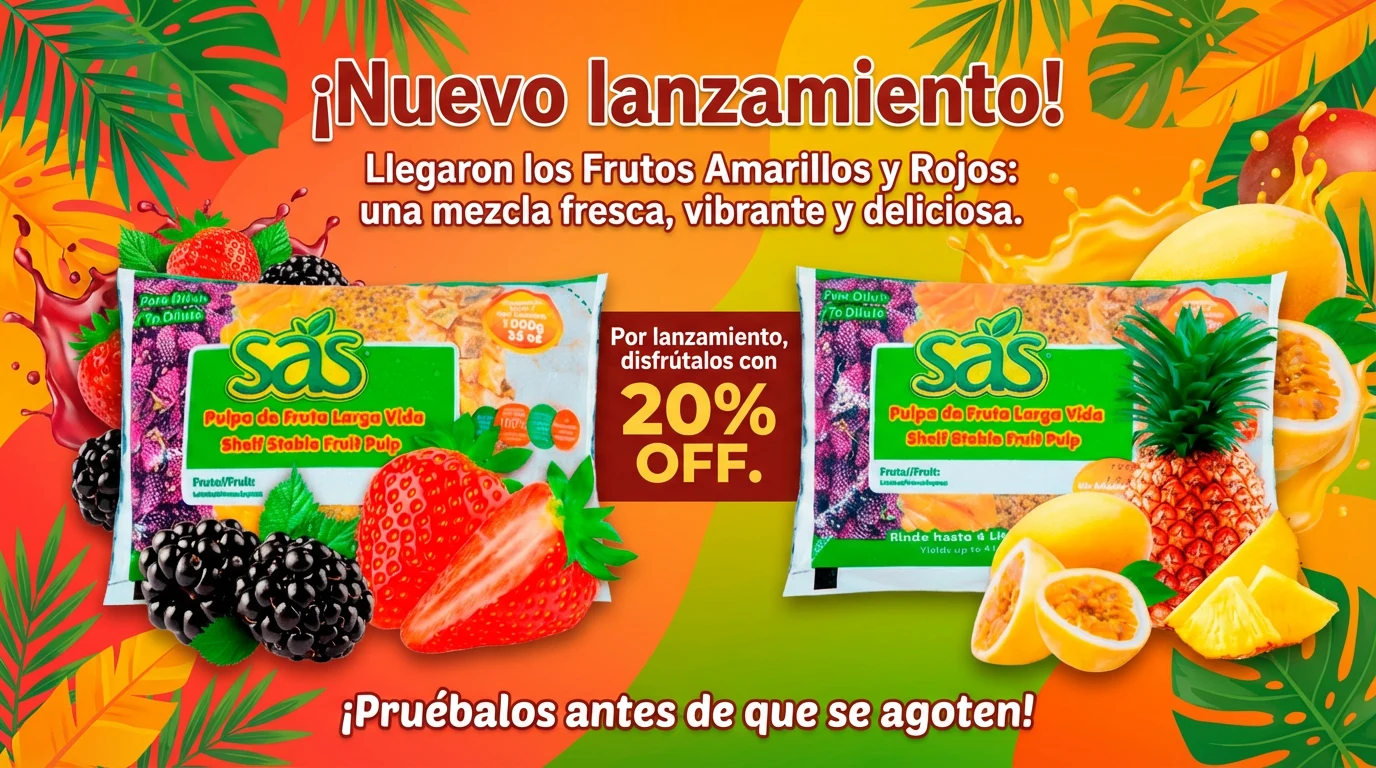
- Frozen fruit pulp: made by breaking down and sieving fresh fruit, which preserves a vibrant sensory profile. It needs a constant cold chain at -18 °C (0 °F) to keep a shelf life of up to 24 months.
- Aseptic pulp: goes through pasteurization and packaging under sterile conditions, which allows storage at room temperature for 8 to 18 months.
- Concentrated pulp: ideal for optimizing transport, since part of the natural water is removed to cut volume and weight, then reconstituted at the plant.
End use: impact on formulation
The destination of the ingredient dictates the quality standard you should require from your fruit pulp suppliers. For example:
- Beverage industry: refined pulps are needed to ensure an even blend in juices, flavored waters, and craft beers.
- Dairy and ice cream: it’s crucial to control viscosity and pH to prevent syneresis in yogurt or unwanted ice crystals in ice cream.
- Baking and sauces: here, natural fiber or small pieces can be a desirable trait that adds authenticity.
Packaging and inventory turnover
Matching the packaging to your production pace is key to efficiency:
- Drums and bulk: ideal for large-scale operations that process tons each month and need 200 kg formats.
- 1 kg to 5 kg bags: perfect for mid-sized companies that want a balance between manual handling and volume.
- Single-serve portions: 100 g to 250 g formats that make portion control easier in restaurants and cafés.
A checklist to evaluate fruit pulp suppliers
Trust is built on verifiable technical data. A serious supplier should be able to demonstrate consistency from one batch to the next.
Minimum documents and spec sheets
The spec sheet is the raw material’s ID card. Make sure it includes:
- Fruit origin: details on the growing regions to ensure traceability from the field.
- Chemical composition: a breakdown of ingredients, where pure fruit and ascorbic acid (as an antioxidant) usually stand out.
- Certifications: confirm that packaging materials meet food-contact standards.
Critical indicators: Brix and pH
Soluble-solids levels (°Brix) determine natural sweetness and the ingredient’s yield. Each fruit has its own standard. For example:
- Açaí: stays in a range of 6.0 to 9.0 °Brix.
- Blueberry: the industry standard sits between 10.0 and 14.0 °Brix.
- Raspberry: ranges from 11.0 to 13.0 °Brix.
- Black cherry: carries a high concentration of 19.0 to 26.0 °Brix.
- Lemon: controlled acidity, with Brix from 6.0 to 9.0.
Food safety and traceability
Food safety is non-negotiable, so it’s vital to ask about critical control points, such as pasteurization and the use of filters or metal detectors. The lot system should also let you trace the product by expiration date or specific production codes, ensuring a fast response to any issue.
Fruit pulp suppliers in logistics and technical operations
Transport and storage are where product quality tends to break down if it isn’t supervised properly.
Cold chain and transport
For frozen pulps, the vehicle must be clean and hold a temperature of -18 °C (0 °F). Reliable fruit preservation also depends on handlers following hygiene requirements, such as avoiding jewelry and protecting the integrity of the packaging.
Storage and FIFO rotation
Once the goods arrive, storage should follow the “first in, first out” (FIFO) principle. Because shelf life varies between 8 and 24 months depending on the product type, rigorous inventory control reduces waste and shrinkage.
How to choose fruit pulp suppliers when comparing quotes
When you receive offers from different fruit pulp suppliers, the analysis has to be multidimensional so you don’t fall for the lowest-price trap.
- Price vs. yield: a pulp with low Brix forces you to use more of the ingredient to reach the desired flavor, raising the final recipe cost.
- Integrated logistics: check whether the price includes transport to your plant and whether the supplier offers national coverage or export experience.
- Batch consistency: ask about sampling plans and acceptance criteria, making sure color, flavor, and viscosity don’t vary dramatically between deliveries.
Where to buy and how to choose fruit pulp suppliers for your profile
The right supplier also depends on geographic location and purchase volume:
- Colombian fruit pulp: the country is a hub of excellence for tropical fruits like mango, passion fruit, and Hass avocado. You’ll find specialized fruit pulp suppliers with direct B2B sales and e-commerce options for kilo formats.
- United States: the market demands bulk purées for the snack and beverage industries. Here, B2B suppliers that guarantee year-round supply stability are the priority.
- Global market: the current trend leans toward products with no added sugar that are 100% natural, responding to consumers who want clean labels and health benefits.
Frequently asked questions about fruit pulp suppliers
Beyond what we’ve already covered, here are answers to a few more questions you probably have:
- What should a fruit pulp spec sheet include for industrial purchasing? It should specify the product name, description, composition, origin, physicochemical parameters, microbiological characteristics, shelf life, and packaging conditions.
- Frozen or aseptic, which should you choose if you have a cold chain? If you have freezers available, frozen pulp preserves freshness better. That said, aseptic pulp offers greater logistical flexibility and security in areas where the power supply is unstable.
- How can you make sure the pulp is 100 % fruit with no added sugar? Always check the ingredient list on the spec sheet. Top-quality industrial products contain only the edible portion of the fruit plus natural antioxidants to prevent oxidation.
Conclusion: how to choose fruit pulp suppliers
Ultimately, the relationship with your fruit pulp suppliers should be seen as a long-term technical partnership rather than a simple transaction; it’s about ensuring that every gram of pulp entering your plant meets the food-safety and quality standards your customers expect. Strong supplier management, built on spec-sheet analysis, Brix verification, and cold-chain control, protects your brand’s reputation and improves your operation’s profitability. Transparency and logistical responsiveness are the indicators that separate an ordinary vendor from a strategic partner essential to your growth.
Request your quote in 60 seconds
At Alimentos SAS, we develop fruit-based solutions for industry with the highest quality standards and technical support. Fill out the fields below for a tailored proposal:
Fruit(s):
Format (frozen/aseptic):
Packaging:
Monthly volume:
City/country:
Receiving temperature:
Use (HORECA/industry):
So go ahead, write to us, and we’ll help you find the right long-life fruit pulp right away.
References
- Alibaba Plantin. (2023). How to choose fruit pulp and concentrate: A complete buying guide.
- Fresh Fruit Portal. (2025). Colombian mango exports and implications for processed fruit supply.
- Institute of Food Technologists. (2025). Brix, consistency, and quality control in fruit-based ingredients.
- Mordor Intelligence. (2024). Juice concentrates market size, share & trends analysis.
- Mordor Intelligence. (2025). Fruit snack market: Ingredient sourcing, quality requirements, and supplier analysis.
- Next Stop Group. (2023). Importación de pulpas y frutas procesadas colombianas para hoteles y food service.