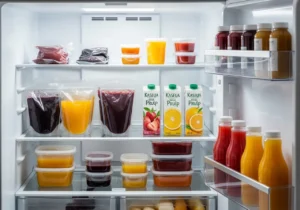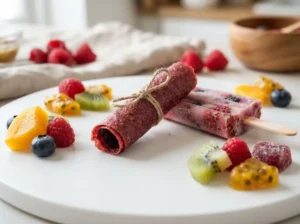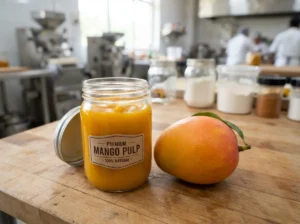

When discussing fruit pulp for juices, we mean the raw material obtained from the edible portion of selected fruits. In a beverage plant, it helps standardize the process, plan production, and have fruit available year-round.
Choosing the right fruit pulp means reviewing format, soluble solids, acidity, and consistency between lots. That decision affects final flavor, cost per liter, and operational stability. Below, you will find the technical criteria that typically define it.
What is fruit pulp for juices?
It is the product obtained by separating the edible portion of the fruit and processing it without fermentation. fruit pulp for juices retains the characteristic color, aroma, and flavor of each variety.
In addition, it serves as a base ingredient for juices, nectars, and formulated beverages in the food industry.
Unlike fresh fruit, it arrives ready for dosing, with measured parameters and a shelf life defined by the format.
How is fruit pulp obtained?
The industrial process follows controlled stages designed to ensure safety and uniformity. These are the main ones:
- Receiving and sorting. Fruit that does not meet maturity parameters is discarded.
- Washing and sanitizing. Reduces the microbial load before processing.
- Blanching and pulping. Separates peels, seeds, and unwanted fibers.
- Sieving and homogenization. Adjusts particle size and creates a uniform texture.
- Preservation and packaging. Determines whether the product will be frozen or aseptic.
Each stage influences the final quality of the fruit pulp for juices that reaches your plant.
How does it differ from juice, nectar, and concentrate?
These terms are often mixed together in the same technical data sheet. The difference lies in the degree of fruit processing:
- Pulp. Raw material obtained from the edible portion, without fermentation.
- Juice. Liquid product extracted directly from the fruit.
- Nectar. Beverage formulated with juice or pulp, water, and other permitted ingredients.
- Concentrate. Product from which part of the water has been removed to reduce volume.
How is fruit pulp for juices used within the plant?
In practice, the pulp is diluted, adjusted, and stabilized according to the final product specification. The development team defines the proportion, sweetness, and acidity before scaling the batch.
This preliminary work prevents surprises when production moves to industrial volumes and margins tighten.
On filling lines, particle size is also checked to prevent blockages and unplanned downtime.
How much pulp is needed for one liter of juice?
It depends on the fruit, the formulation, and the product to be obtained. As a reference, 1 kg of pulp can yield up to 4 liters of beverage, depending on the fruit.
That ratio is not universal, so it should be validated with plant trials before finalizing a formula.
A high-density fruit such as soursop behaves differently from an acidic, lighter fruit. Therefore, each reference has its own dilution factor.
How do you calculate pulp yield?
The basic formula is simple: yield equals beverage obtained divided by pulp used. However, the actual result depends on several technical variables:
- Soluble solids. Determine the product’s contribution of natural sweetness.
- Acidity and pH. Affect the sensory profile and microbiological stability.
- Water content. Adjusts the final dilution of the beverage.
- Added sugar. Modifies the balance between sweetness and acidity.
- Product specifications. Define the minimum required fruit percentage.
With these data in hand, calculating fruit pulp for juices is no longer an estimate.
What advantages does fruit pulp for juices offer at industrial scale?
For a B2B operation, the benefits are measured in costs, time, and finished-product stability. These are the factors that carry the most weight in the purchasing decision:
- Standardization. Reduces variation between finished-product lots.
- Year-round availability. Avoids the seasonality of fresh fruit.
- Less handling. Eliminates washing, peeling, and pulping steps at the plant.
- Storage optimization. Simplifies space requirements and inventory turnover.
- Less waste. Losses are controlled by the supplier rather than on your line.
Do you need technical data sheets for fruit pulp for juices for your next formulation? The Alimentos SAS team can support you in that evaluation.
Which fruits work best for producing juices?
The choice depends on the desired sensory profile and expected yield. These tropical varieties are the most requested by the industry:
- Mango. Adds body and sweetness; works very well in nectars.
- Passion fruit. High acidity; commonly used in blends and citrus-style beverages.
- Soursop. Dense texture; requires careful dilution control.
- Blackberry and berries. Intense color; sensitive to oxidation.
- Strawberry. Sweet profile; common in beverages and ice cream with fruit pulp.
- Pineapple. Good yield; adds freshness and moderate acidity.
- Lulo. Pronounced acidity; widely used in traditional-style juices.
Each variety requires formulation adjustments when working with fruit pulp for juices.
Frozen pulp or shelf-stable pulp?
Both formats work, although they suit different operations. The decision depends on your cold-storage capacity, logistics, and production volume.
It is also worth reviewing the distance to the delivery point and how frequently your inventory turns over.
Neither is objectively better: the right format is the one your plant can maintain without added costs.
Frozen fruit pulp
Frozen fruit pulp preserves the sensory profile with minimal thermal intervention. In return, it requires a complete cold chain, from transportation through storage.
It is convenient for plants that already have freezing infrastructure and consistent turnover.
It also facilitates campaign-based production because seasonal volume can be stored and used during lower-harvest months.
Shelf-stable or aseptic fruit pulp
Shelf-stable fruit pulp is processed and packaged under aseptic conditions. Therefore, it simplifies logistics because it does not depend on the same cold-storage infrastructure.
It is especially useful for operations that prioritize availability, turnover, and long-distance shipments. Aseptic packaging protects the product without freezing, freeing cold-room space for other ingredients.
In both cases, fruit pulp for juices must deliver what its technical data sheet promises.
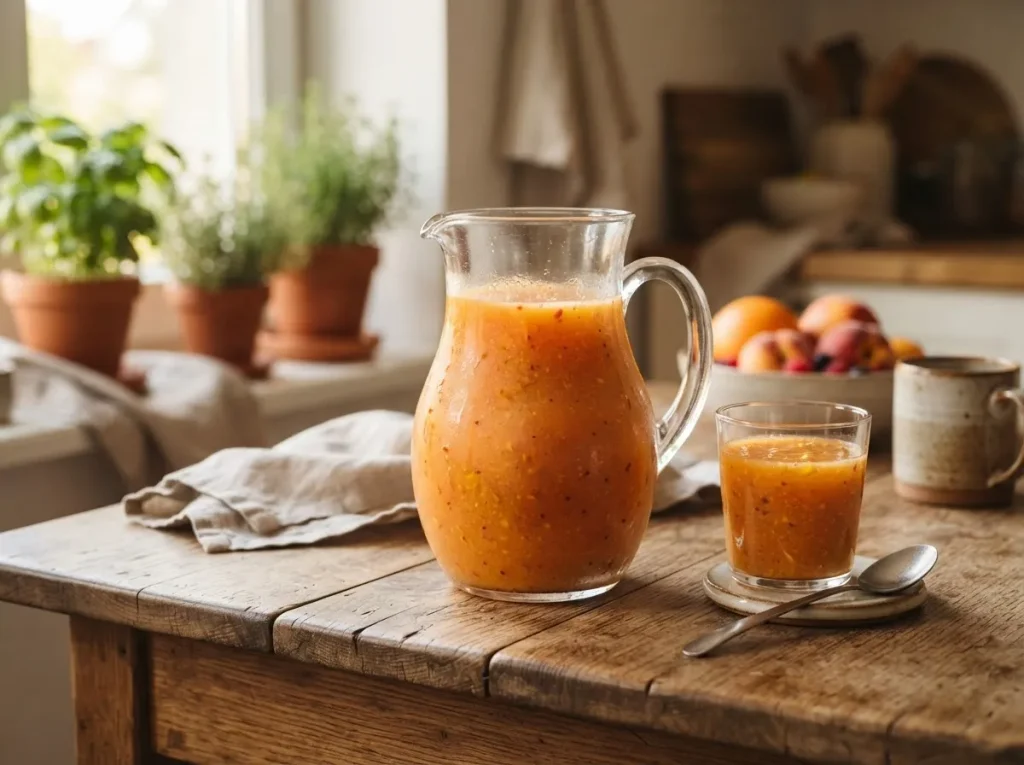
What characteristics should a good fruit pulp for juices have?
Quality is verified in the technical document and, above all, in how the product behaves on the line. Review these parameters before approving a supplier:
- Physicochemical. Soluble solids, acidity, pH, and actual fruit content.
- Sensory. Aroma, flavor, color, and texture characteristic of each variety.
- Consistency. Stable viscosity to prevent separation in the package.
- Lot uniformity. Perhaps the most critical parameter in any industrial formulation.
- Declared shelf life. It should match your actual storage and consumption times.
Always request samples from more than one lot and compare them against the technical data sheet before approving the purchase.
What problems can arise during production?
Anticipating failures prevents costly reprocessing and inconvenient returns. These are the most common issues at the plant:
- Flavor and color variation. Often originates in lots made with different fruit.
- Excess particles. May clog filling lines.
- Sedimentation. Occurs when there is insufficient stabilizer or agitation.
- Differences in soluble solids. Force formula adjustments during production.
- Cold-chain failure. Affects the product’s color, aroma, and shelf life.
Sound technical control of fruit pulp for juices significantly reduces these risks.
How to choose a fruit pulp supplier?
Beyond the price per kilogram, it is worth reviewing the manufacturer’s technical and operational capacity. These criteria help make an objective comparison:
- Complete technical data sheets. They should include measurable, verifiable parameters.
- Available formats. Frozen, aseptic, and volume-based presentations.
- Supply capacity. Ensures continuity during peak season.
- Traceability and safety. Current certifications and documented controls.
- Industrial experience. Track record in applications similar to yours.
Requesting technical information before formulating saves time, adjustments, and reprocessing costs. And a supplier with industrial experience understands that your priority is not just flavor, but repeatability.
Alimentos SAS: fruit pulp for juices for your operation
At Alimentos SAS, we have developed, produced, and marketed fruit pulps and nectars since 1981, in frozen and aseptic formats. Our portfolio serves the beverage, ice cream, dairy, jam, and bakery industries in both the domestic and export markets.
Additionally, we hold ISO 22000, HACCP, and KOSHER certifications, as well as favorable assessments from INVIMA and the FDA. This documented traceability facilitates customer audits and supports export processes.
Our technical team supports the selection of the reference, format, and presentation according to each plant’s volume. Request technical advice and compare the fruit pulp for juices formats that best fit your plant.
References
- Codex Alimentarius Commission. (n.d.). General standard for fruit juices and nectars (CXS 247-2005). FAO and WHO.
- Ministry of Health and Social Protection of Colombia. (n.d.). Resolution 3929 of 2013, establishing the technical regulation on sanitary requirements for fruits and beverages with added fruit juice or pulp or fruit concentrates.
- Ministry of Health and Social Protection of Colombia. (n.d.). Resolution 2674 of 2013, establishing sanitary requirements for the manufacture, processing, packaging, and marketing of food.