
Defining what to do with mango pulp guides industrial developments, surpassing purely homemade culinary preparations. This processed ingredient allows manufacturing profitable commercial foods without managing complex operations when handling harvested fruit. The global market reached USD 20.3 billion during the year 2023, consolidating positive figures (Grand View Research, 2024). Likewise, several financial projections indicate a growth to achieve USD 32.3 billion worldwide in the short term. In fact, many international manufacturers prefer to incorporate stabilized inputs by using long-life mango pulp.
What to do with mango pulp in corporate industries
Processed pulp allows structuring gastronomic production lines that prove profitable for the plant. Consequently, food processors manage to design commercial recipes by incorporating these productive bases to operate efficiently:
- The food sector creates sorbets by combining this puree with the thermal stabilizers required for the daily process.
- The dairy industry formulates yogurts by taking advantage of the characteristic color that this vegetal ingredient provides during its mixing (Mordor Intelligence, 2026).
- National ice cream makers prefer to preserve the original sensory characteristics through a frozen mango pulp for all their new creations.
Finally, these practical applications boost sustained industrial developments within competitive markets worldwide without pauses for commercial companies.
Corporate formulations for beverages and dairy desserts
The primary products segment projects annual growths of 7.4% evaluating consumption trends (Grand View Research, 2024a). As a result, many factories formulate fruit mixtures to create commercial smoothies with sweet ingredients processed under a strict technical standard. A long-life sweetened mango pulp provides an ideal base to structure varied industrial recipes without delays. Learning what to do with mango pulp facilitates creating multiple creamy desserts without the need to incorporate harmful artificial chemical additives. Furthermore, large pastry industries integrate this dense puree to design attractive fillings suitable for complementing various baked display breads.
Logistical benefits of knowing what to do with mango pulp
The pulp optimizes plant processes, avoiding the handling of whole agricultural fruits. In addition, industrial plants reduce operational expenses considering these three technical benefits applicable to food production:
- Constant availability throughout the entire year, preventing operational interruptions that are caused by local weather changes.
- Standardization of internal processes to achieve consistent sensory profiles across all mass production lines.
- Greater shelf life of the input, maintaining prolonged storage within the warehouses arranged by the operating company.
The commercial beverage segment concentrated a 35% participation in the global market (Persistence Market Research, 2025). Certainly, this participation drives the formulation of flavored liquids seeking to renew the gastronomic menus offered by restaurants.
Productive commercial growth factors
Analyzing what to do with mango pulp guides corporate strategies, achieving all developments of functional beverages. Annual availability and logistical storage are factors associated with market growth (Grand View Research, 2024b). Therefore, processed ingredients solve logistical problems, avoiding financial losses due to fairly rapid fruit deterioration. Factories plan their inventories by taking advantage of presentations that withstand storage periods without requiring extreme cold systems. Consequently, producing companies optimize the use of operational resources by developing food options that prove nutritious.
Commercial applications: what to do with mango pulp
Exploring recipes with mango pulp generates gastronomic innovations with exact formulations aimed at mass market consumption. Likewise, food developers explore multiple market alternatives by integrating these vegetal bases in the following formats:
- Fruit smoothies that complement the healthy breakfasts offered in major restaurant chains during the mornings.
- Dairy yogurts with a thick texture that satisfy the demand for desserts in the region’s markets.
- Baked sweet desserts that maintain the necessary moisture thanks to the incorporation of this processed fruit base.
- Easy-to-prepare tropical sorbets that reduce preparation times in industry kitchens.
Beverage applications represented 38.7% of the total consolidated market according to sectoral studies (Future Market Insights, 2026). Certainly, this market projects sustained expansions, reaching USD 4 billion in profitability during the year 2036.

Understanding the composition of the ingredient
Learning what is frozen fruit pulp answers doubts when formulating recipes. Similarly, knowing what to do with mango pulp defines commercial strategies for creating industrial menus. Industrial applications represented 66.29% of the total market evaluated by specialists (Mordor Intelligence, 2026). Aseptic processing encourages the use of these ingredients by formulating liquids with an attractive profile for a large number of consumers. As a result, this market reached USD 1.25 billion, generating stable revenues for the country’s productive chain.
What to do with mango pulp in international markets
Analyzing mango pulp allows selecting appropriate formats, maintaining a continuous supply for the plant. Furthermore, producing plants evaluate functional options to optimize their logistical chains through the application of these elements:
- Organized inventories to sustain mass productions without facing stockouts during month-end closings.
- Logistical distribution to distant markets, reducing the costs associated with the ground transport of perishable foods.
- Controlled space refrigeration, avoiding losses that affect the profitability of food manufacturing industries.
- Advanced technology hermetic packaging, preventing cross-contamination during product handling in clean areas.
- Documented traceability of each batch, supporting the audits required by market regulatory entities.
Aseptic and frozen formats make up the offer used internationally to supply the required inputs (Future Market Insights, 2026). Therefore, adopting standardized packaging reduces the operational times required during recipe preparations at scale.
What advantages does it have over fresh mango?
Reviewing what to do with mango pulp solves the problems associated with the processing of all agricultural products. Indeed, receiving the ready-to-use ingredients reduces complex internal stages like peeling and disposing of peels. This processed raw material decreases biological risks by offering prolonged durability in the central plant’s logistical warehouses. Consequently, operational plants plan their purchases, avoiding dependence on the immediate use demanded by natural harvests. A standardized base preserves the consistency between batches, providing technical peace of mind for companies producing dairy desserts.
Ideal combinations for gastronomic products
Deciding what to do with mango pulp allows fusing tropical flavors, structuring commercial catalogs for international restaurants. Similarly, manufacturers integrate diverse fruits, achieving vibrant sensory profiles through the use of alternatives:
- Passion fruit, generating acidic contrasts that elevate the flavor of desserts served in urban chain hotels.
- Pineapple, providing additional sweet notes to create refreshing smoothies during hot seasons on the beaches.
- Coconut, creating creamy tropical profiles that combine perfectly with industrial-level pastry and bakery recipes.
- Orange, adding citrus nuances that balance the formulations of sweet and sour sauces for main meat dishes.
- Strawberry, adding reddish colors that improve the visual presentation of beverages served in modern restaurants.
- Lemon, enhancing fresh aromas that highlight the natural flavor of fruit ice creams and sorbets for sale.
Citrus combinations provide additional freshness, balancing the sweetness of dairy desserts formulated at the industry level. Undoubtedly, creating exotic mixtures expands markets by attracting consumers interested in finding new culinary experiences to taste the menu.
What products can be made with mango pulp?
Defining what to do with mango pulp facilitates producing ice creams adaptable to different thermal processes in the food industry. In the same way, bakery factories produce jams and dense fillings that enrich the baked cakes offered commercially. This processed input works as a base for nutritious yogurts, achieving attractive yellow colors for the final consumer. Therefore, designers prepare sweet sauces to accompany savory dishes on the menu of international restaurants. Technical creativity allows incorporating these mixtures into energy bars, offering nutritious alternatives for mass population consumption.
Evaluation of processed industrial raw materials
Figuring out what to do with mango pulp requires answering technical concerns raised by food sector experts. Likewise, operational directors evaluate these seven critical areas before applying the previously processed fruit bases in the plant:
- Online cooking times, validating that the ingredients retain their nutritional properties during the standardized thermal treatment.
- Exact formulation dosage to provide an adequate consistency in each batch produced within the manufacturing plant.
- Required textures in desserts, seeking to please the demanding palates of regular customers in food chains.
- Authentic flavors that avoid incorporating artificial additives to achieve clean labels on the packaging of processed foods.
- Striking natural colors that manage to capture buyers’ attention when reviewing the shelves of local supermarkets.
- Budgeted monthly operational costs, analyzing the raw material’s financial impact on the final product’s margin.
- Health permits approved by competent authorities, supporting regulatory compliance to distribute foods without facing legal sanctions.
Ultimately, resolving these technical doubts prevents costly errors that ruin commercial batches prepared for national supermarkets. Factories manage to standardize their gastronomic catalogs by executing logistical solutions that speed up dispatches quite profitably.
How is it stored to maintain its quality?
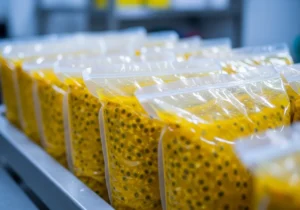
Knowing what to do with mango pulp involves designing protocols to protect the chemical composition of the processed commercial product. Consequently, aseptic formats facilitate storing goods on pallets, avoiding dependence on freezing systems. These hermetic bags tolerate ambient temperatures until opened to begin the cooking stages on the line. In contrast, frozen presentations require uninterrupted cold rooms, preserving sensory attributes and preventing fungal biological growth. A storage management prevents financial losses, providing constant supplies for the different food production lines.
Does mango pulp work for industrial production processes?
Understanding what to do with mango pulp corroborates its usefulness by transforming raw materials in high-volume preparations. Certainly, this input withstands thermal treatments such as pasteurization and baking without losing the tropical flavors of fruit origin. Factories reduce several operational steps by eliminating the washing and pulping demanded by the handling of fresh fruits. As a result, plants increase their daily productivity by processing uniform batches to produce nutritious mass-consumption beverages. Companies consolidate profitable models by using these reliable and versatile plant inputs continuously in the plant.
Technical support from Alimentos SAS
Knowing what to do with mango pulp encourages profitable gastronomic developments for organic food processing industries. Indeed, our company processes certified ingredients, offering standardized inputs ideal for the work of massive international formulations. We handle aseptic packaging and frozen formats, optimizing logistical handling within the nation’s producing plants. Because of this, we support your commercial growth by providing specialized advice that resolves concerns about the integration of fruit ingredients. Contact us to know our solutions and elevate productive quality by using these agricultural raw materials of Colombian origin.
References
- Future Market Insights. (2026). Mango puree market.
- Grand View Research. (2024a). Processed mango products market (2024–2030).
- Grand View Research. (2024b). Processed mango products market to reach $32.33Bn by 2030.
- Mordor Intelligence. (2026). Mango puree market size, share & 2031 growth trends report.
- Persistence Market Research. (2025). Mango puree market size, share, and growth forecast, 2025–2032.