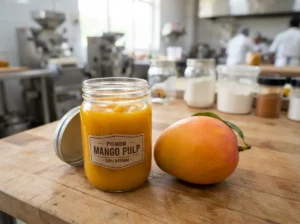

Understanding how to preserve mango pulp separates intact sensory profiles from batches losing color, aroma, and yield. If your facility processes frozen mango pulp, proper storage conditions dictate the actual shelf life of every single order. Consequently, operators must realize that none of the three available commercial presentations handle the exact same way.
Specifically, this guide details R&D criteria like temperature, shelf life, open containers, FIFO rotation, and format selection parameters. Finally, the article concludes by explaining what you should evaluate in a supplier alongside five frequently asked questions.
Why does proper pulp conservation completely define the final quality
Mango base remains a sensitive ingredient because acidity, soluble solids, and microbiological load react to time and storage temperature. Furthermore, variables exceeding expected ranges travel from warehouses into finished products, creating color changes, phase separation, or flavor deviations. Therefore, knowing how to preserve mango pulp represents a critical quality decision rather than a simple logistics issue.
Sensory quality and strict food safety standards in every single batch
Properly stored fruit base perfectly maintains the characteristic ripe aroma, a completely homogeneous color, and a highly fluid texture. In fact, our frozen technical sheet indicates 15.0 to 24.0 Brix, pH of 3.60 to 4.30, and 0.30 to 0.70 percent citric acid. Undoubtedly, these specific values sustain microbiological stability and allow operators to repeat identical formulations during every production batch.
Fewer product losses and a much more predictable cost per kilogram
Every single kilogram discarded due to oxidation, freezer burn, or packaging rupture directly increases your complete final formulation costs. Meanwhile, maintaining stable storage conditions significantly reduces waste and makes ingredient consumption entirely predictable during every work shift. For purchasing managers, this directly translates into highly accurate orders and much less frozen capital sitting inside warehouses.
How to preserve mango pulp according to its specific commercial
The three circulating industry presentations follow different logical parameters, and confusing them explains significant product losses before actual usage:
- Frozen ingredient formats depend entirely on maintaining a continuous and rigorously controlled cold chain environment.
- Long-life and sugared versions utilize aseptic packaging that easily supports room temperatures while containers remain securely closed.
Ultimately, discovering how to preserve mango pulp involves one rule: packaging dictates thermal ranges, and opening begins another countdown.
Frozen pulp: maintaining an uninterrupted cold chain system
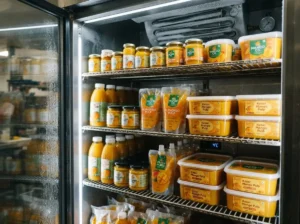
You must store Alimentos SAS frozen fruit base at -18 °C to maintain a 24-month lifespan without interrupting cold chains. Consequently, even brief partial thawing dramatically shortens the useful period despite having a currently valid printed expiration date. Operators should place the product inside the most stable cold room zone and actively record temperatures during shifts.
Long-life and nectar versions: controlled room temperature storage
Long-life presentations leverage thermal treatments and aseptic packaging, allowing operators to keep them at room temperature before opening. However, ambient does not mean arbitrary conditions; facilities require dry spaces completely away from sunlight, ovens, or boilers. Sugared versions follow identical criteria, while their specific defined sweetness yields excellent results inside standardized beverages and fillings.
Actions to take once you open the container
Opening the packaging completely changes the scenario because contents immediately face oxygen and ambient plant environment exposure. Knowing what to do with mango pulp after opening prevents costly reprocessing; you must consume it quickly under refrigeration. Thus, transferring ingredients into clean, properly closed, and accurately labeled containers eliminates any doubts during the next shift.
How to preserve mango pulp without losing useful shelf life
Temperature certainly matters more than any other variable, although it never actually acts completely alone during daily operations. Oxygen exposure, physical manipulation, and general warehouse organization work together to deteriorate batches that technically remain perfectly valid. Reviewing How to preserve mango pulp from dispatch until the mixing tank transforms expiration dates into highly reliable data.
Transport, oxygen exposure, and dangerous cross-contamination risks
Verifying container thermal records before signing receptions avoids arguments, while good food safety practices provide excellent auditing criteria. Inside the facility, performing four specific verifications per shift effectively covers a significant portion of the operational risks:
- Workers must close all packaging containers immediately after completing every single ingredient extraction during their active work shift.
- Staff should employ exclusive processing utensils and strictly sanitize them before beginning any daily food preparation activities.
- Managers must guarantee strict physical separation between fruit bases, raw meats, and chemical substances inside the warehouse.
- Teams need clean pallets elevated above the floor, keeping inventory far away from any damp or wet walls.
Furthermore, this documentation leaves concrete evidence for external audits and actively helps facilities attack expensive ingredient waste.
FIFO rotation and excellent manufacturing process practices
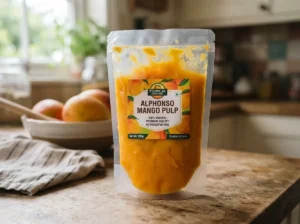
The FIFO principle, meaning first in first out, strictly organizes warehouses by expiration dates rather than worker convenience. Applying this requires clear labeling, placing older batches near the front, and meticulously recording every single inventory exit. Alongside that particular discipline, five essential daily practices strongly sustain overall quality during your continuous food production runs:
- Receiving departments must verify exact temperatures, packaging integrity, and specific batch numbers during every single supplier delivery event.
- Storage requires separating items by presentation, completely avoiding any mixing between frozen formats and long-life ambient commercial products. Workers must conduct controlled thawing processes strictly inside refrigerators, never leaving product out at unregulated room temperature levels.
- Handling procedures demand properly sanitized utensils operated by highly trained personnel aware of strict internal food safety guidelines.
- Quality teams need perfectly documented batch traceability stretching from initial ingredient reception directly into the final packaged product.
Once managers resolve internal organization, they must carefully decide which specific commercial presentation they actually need to purchase.
Frozen or long-life options?
Crucial parameters for deciding: Here, how to preserve mango pulp entirely depends upon facility infrastructure and the sensory profile your formulation demands. Frozen formats preserve fruit aroma and color with greater fidelity, fitting perfectly into manufacturing plants featuring cold rooms.
Conversely, long-life options provide essential flexibility for operations lacking freezing capacity or shipping toward zones hindering cold maintenance. Consequently, three specific operational parameters will help you clearly organize and finalize this vital purchasing decision right away:
- Measure your real cold storage capacity using available cubic meters across the entire active food production facility.
- Compare the actual processed volume per shift directly against the exact size of the requested commercial presentation.
- Accurately calculate both the physical distance and total transit time originating from your primary ingredient supplier plant.
Frequently asked questions regarding how to preserve mango pulp
Frequent inquiries from purchasing and research departments usually concentrate on times, temperatures, and maneuvering margins regarding unexpected thermal deviations. Therefore, these comprehensive answers effectively conclude our detailed review covering how to preserve mango pulp across every format:
- How long does the premium frozen mango base last inside professional manufacturing plants?
You get twenty-four months at -18 °C, provided operators never interrupt the established cold chain anywhere during transit.
- How should workers preserve this sensitive product immediately after opening the commercial container?
You must consume it rapidly and keep it refrigerated or frozen inside closed, properly labeled containers during usage.
- What exactly happens if logistics providers or warehouse workers accidentally break the continuous cold chain?
The officially declared shelf life immediately ceases to apply under these highly irregular and completely unexpected temperature conditions. Consequently, quality control teams must rigorously evaluate the affected batch using strict sensory and microbiological criteria before usage.
- Which specific packaging option actually preserves the delicate fruit product best during standard factory operations?
The best option matches your exact per-shift consumption volume; perfectly portioned presentations significantly reduce oxygen exposure compared to large containers opened multiple times.
How to choose a reliable supplier
An excellent supplier heavily influences ingredient shelf life long before the final product actually reaches your main warehouse. Selecting optimally ripe fruit, controlling critical pasteurization points, ensuring packaging integrity, and providing traceable batch numbers absolutely determine the starting margin for every order. You should systematically request technical data sheets, health permits, batch consistency records, and specific format availability before closing deals.
At Alimentos SAS, we produce and commercialize tropical fruit purées as raw materials for beverages, ice creams, dairies, jams, and pastries, featuring current health permits and batch traceability. Applying how to preserve mango pulp yields better results when the portfolio naturally targets your specific operational type:
- Long-life presentations perfectly suit food processing operations strongly requiring ambient temperature storage solutions before opening the commercial container.
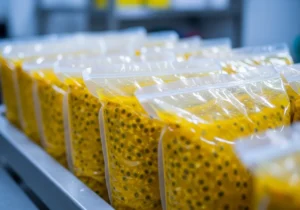
- Frozen alternatives range from 230g to 1.5kg, including portioned kilogram boxes containing ten 100g units for cold-chain facilities.
- Sugared long-life choices deliver fantastic results for commercial beverages and standardized fillings requiring a very specific defined sweetness.
If your next tropical formulation requires stable ingredients, review our portfolio and request the technical sheet your process demands.
References
- Food and Agriculture Organization of the United Nations. (2023). Food safety and quality. FAO.
- Food and Drug Administration. (2023). Refrigerator and freezer storage chart. U.S. Department of Health and Human Services.
- Institute of Food Technologists. (2022). Food processing and preservation. IFT.
- United States Department of Agriculture. (2023). Freezing and food safety. Food Safety and Inspection Service.