
Achieving optimal preservation for fruit inputs remains essential to maintain profitability and quality during any gastronomic or industrial process. Knowing how to preserve passion fruit pulp helps protect the integrity of such a versatile and highly demanded ingredient. Throughout this guide, we explore the best practices to ensure your product maintains its organoleptic characteristics effectively. Whether you work in a professional kitchen or manage a production line, these techniques will certainly help you.
What is the best way to how to preserve passion fruit pulp?
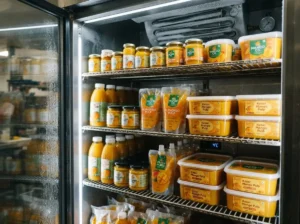
Proper cold chain management acts as the decisive factor for maintaining safety and flavor. To determine the most effective strategy, it is vital to evaluate your usage volume and infrastructure availability.
Regarding the question about the best way for how to preserve passion fruit pulp, we answer: fridge, freezer, or long-life pulp.
- Immediate refrigeration: use this option if you plan to consume the product shortly, always ensuring the container stays airtight.
- Technical freezing: this remains the safest alternative for long-term storage, maintaining quality well for significantly extended time periods.
- Long-life solutions: for businesses requiring constant availability, opting for a long-life passion fruit pulp is the most efficient strategy.
What changes if the pulp is natural, frozen, or long-life?
Packaging nature and previous processing steps determine the preservation method. While natural pulp demands strict temperature handling from the moment of extraction, frozen or aseptic presentations stabilize the product perfectly without compromising any nutritional value.
How to preserve passion fruit pulp by portions
When managing high volumes, fractioning is indispensable. Preserving raw material by predefined portions allows you to defrost only what is necessary, thus avoiding unnecessary exposure of the remaining inventory to temperature changes.
How long does passion fruit pulp last?
Understanding shelf lifetimes is essential for inventory management. Food that remains frozen continuously at a temperature of 0 °F (-18 °C) or lower remains safe for human consumption, although its quality may eventually vary over time.
How to preserve passion fruit pulp and how long does it last in the fridge?
Under refrigeration (4 °C or lower), natural pulp shelf life is limited. You must verify that the container is completely watertight to prevent passion fruit acidity from absorbing odors from other foods present inside the fridge.
How long does it last in the freezer?
In an industrial or domestic freezer that maintains constant temperature, the pulp can preserve its main properties for several months; however, the technical recommendation is not to exceed times that might cause freezer burn on the product.
How long does it last after opening a package?
Once the original seal breaks, the biological clock begins ticking. It is imperative to consume the remainder in the shortest time possible, always keeping the product under rigorous refrigeration conditions to maintain freshness.
Difference between safety and quality
Food safety guarantees that the product causes no diseases, while quality refers to the product maintaining its flavor profile and aroma intact. Freezing ensures safety, but it is time management that preserves the quality of your stored fruit pulp.
How to freeze passion fruit pulp step by step
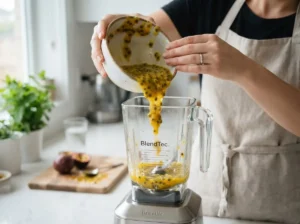
Freezing must be an orderly process to ensure expected results. In this regard, it is noted that freezing effectively stops bacterial growth, although it is important to remember that this method does not eliminate bacteria present.
- Use clean containers or freezer-safe bags: packaging integrity is your first line of defense.
- Freeze in portions for juices, desserts, or sauces: this greatly facilitates daily operations.
- Mark the freezing date: traceability is key for healthy inventory rotation.
- Avoid leaving air inside the package: contact with air can accelerate oxidation and affect the product color.
- Do not freeze and thaw repeatedly: this cycle is the main enemy of texture.
To avoid the homemade portioning process, a practical option for kitchen or business is using frozen passion fruit pulp.
How to preserve passion fruit pulp in the fridge
Refrigeration is suitable only for immediate use. Keeping the refrigerator at a temperature of 4 °C or lower is a critical measure to prevent food from deteriorating prematurely. Keep the following data in mind regarding how to preserve passion fruit pulp:
- What is the recommended temperature? Ensure your cooling equipment operates consistently below 4 °C.
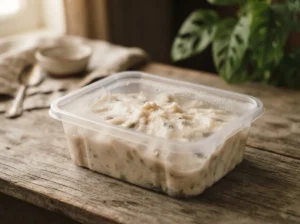
- What container to use? Containers of glass or BPA-free plastic, which allow an absolute airtight seal.
- Why not leave it uncovered? Air exposure promotes rapid oxidation and contamination with external microorganisms.
- How to avoid cross-contamination? Locate the product in compartments where it has no contact with raw meats or other foods that might release juices.
- What to do after opening the package? Transfer the remaining content to a new container and label it immediately with the date.
How to preserve passion fruit pulp and know if it is damaged
Constant observation is your best quality control tool. Given any doubt about the product state, the instruction is clear: if signals of deterioration exist, it is preferable to discard the pulp. But what are those signals?
- Strong smell change: an intense and vinegary aroma is indicative of uncontrolled fermentation processes.
- Fermentation or gas in the container: if the package inflates, it means microorganisms produce internal gases.
- Abnormal color change: the loss of the characteristic bright tones indicates degradation by oxidation.
- Presence of mold: any surface spot, regardless of its size, compromises the total lot safety.
- Strange or too vinegary flavor: confirms that fermentation has advanced beyond levels acceptable for consumption.
Can you refreeze passion fruit pulp?
Part of learning how to preserve passion fruit pulp is knowing that responsible handling requires avoiding unnecessary cycles. Although correctly handled food can technically be refrozen, quality will be affected; so:
- When is it not convenient? If you notice the product has spent much time outside the cold chain, refreezing is a risk.
- What happens with texture and flavor? Repetition of processes causes rupture of cellular structures, affecting viscosity.
- Why is it better to freeze in small portions? This ensures that you only defrost what you will really use in each recipe.
Long-life, frozen, or sugar pulp: which preserves better?
Each format has a competitive advantage according to the use case. For example:
- Long-life passion fruit pulp: is the most practical option for prolonged storage without depending on complex freezing equipment, facilitating immediate availability.
- Frozen passion fruit pulp: ideal when you need to keep the cold chain intact and portion with precision.
- Pulp with passion fruit sugar: highly useful for drinks and sweet preparations, where sweetness is already pre-adjusted.
Common mistakes when learning how to preserve passion fruit pulp
Correcting basic operational habits significantly optimizes product durability. For example:
- Keeping it in an open container: allows the entry of contaminants and moisture loss.
- Leaving it a long time at room temperature: facilitates bacteria multiplying exponentially.
- Not marking the opening or freezing date: prevents adequate rotation of products.
- Defrosting the whole package to use only a part: exposes the whole lot to unnecessary microbiological risks.
- Mixing clean utensils with contaminated utensils: is a direct path to introduce pathogens into a safe product.
- To deepen in various forms of use, you can review what to do with passion fruit pulp in your industrial preparations to take full advantage of this resource.
In conclusion, mastering techniques on how to preserve passion fruit pulp is an intelligent investment that guarantees the quality, safety, and profitability of your preparations. By implementing adequate storage methods, such as strict refrigeration or freezing in portions, you not only prolong the shelf life of your raw material but also ensure that every drink, dessert, or sauce preserves its original aromatic profile and vibrant acidity.
Remember, prevention of common errors, such as repeated cycles of defrosting or the use of inadequate containers, is the key to avoiding waste that affects your operational results. Consistency in handling your inputs is what allows your brand to deliver an exceptional experience to the final customer on every occasion. Applying these professional standards not only optimizes your inventory management but also always reaffirms your business commitment to excellence and food safety.
References
- ConservaTodo. (2023). Cómo conservar maracuyás (fruto, pulpa y jugo).
- El Comercio Perú. (2023). Cómo conservar la pulpa de la maracuyá para tus postres.
- FoodSafety.gov. (2024). Cold food storage chart.
- FreshFruitPortal. (2023). Colombian fresh mangoes make U.S. market debut.
- U.S. Department of Agriculture. (2024). Refrigeration and food safety.
- University of Minnesota Extension. (2022). Freezing fruits.