
Finding where to buy passion fruit pulp becomes far simpler once you understand each country’s available channels. In Colombia, buyers can purchase it directly through manufacturer stores, supermarkets, and several specialized distributors nationwide. Alimentos SAS offers frozen portioned pulp, long-life pulp, and sweetened pulp for everyday commercial use. For industrial buyers in the United States, Alimentos SAS also runs an export channel, FOB quotes, and sample requests. Next, you’ll find a format comparison to help you choose the presentation that best fits your needs. Moreover, interest in passion fruit has grown steadily among professional kitchens for its bold aroma and versatility.
Where to buy passion fruit pulp in Colombia
Knowing where to buy passion fruit pulp near your operation depends mainly on which channel you use. This ingredient reaches buyers through several distinct channels, each one serving a particular type of need:
- Manufacturer’s online store.
- Supermarkets with a frozen foods section.
- Distributors specialized in fruit pulp.
- Suppliers dedicated to restaurants and foodservice businesses.
- Wholesale purchasing for industrial production.
Each available channel responds to a fairly different type of business need and purchasing budget. A small business, for instance, typically handles its entire monthly purchase directly through an online store. Manufacturers, however, usually need a formal commercial agreement with fixed volume commitments and set delivery schedules.
Buying passion fruit pulp online
The Alimentos SAS online store brings together all three available presentations: long-life passion fruit pulp, frozen passion fruit pulp, and sweetened passion fruit pulp. Each product page details its presentation and storage guidelines, so you can compare thoroughly before you buy.
Deliveries in Bogotá and other cities
Confirmed online store coverage currently includes Bogotá and several nearby municipalities within a limited radius. If your business operates outside this zone, reach out to the sales team before you place an order.
Buying wholesale for restaurants or businesses
For restaurants, distributors, or manufacturers with larger volume needs, the sales team offers a wholesale quote tailored to quantity and delivery frequency.
What type of passion fruit pulp to buy
Once you’ve settled where to buy passion fruit pulp, the next step involves picking the right format for your use, storage, and sweetness needs.
Long-life passion fruit pulp
This presentation comes in 1,000 g packages and doesn’t require refrigeration before you open it. According to the product page, it declares no added preservatives: pure, undiluted, unconcentrated fruit, containing 100% pulp. Buyers with limited freezer space should consider it: buy long-life passion fruit pulp.
Frozen, portioned passion fruit pulp
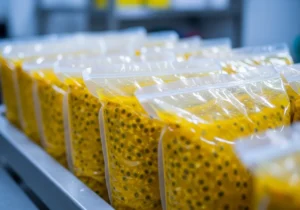
Alimentos SAS packages each kilogram into ten individual 100 g pouches, according to the product page, allowing precise portion control. This format works well for juices, restaurants, or frequent use, though it does require constant frozen storage.
Sweetened passion fruit pulp
This particular option also comes in 1,000 g packages, though its composition differs: roughly 75% fruit and 25% sugar, according to the commercial description. Sellers should never market it as sugar-free pulp, though it works well in recipes that call for standardized sweetness.
Comparison: frozen, long-life, or sweetened pulp
Comparing frozen, long-life, and sweetened passion fruit pulp side by side makes the right choice much clearer:
| Option | Refrigeration before opening | Added sugar | Format | Recommended for |
|---|---|---|---|---|
| Long-life | No | Not declared | 1,000 g | Practical storage |
| Frozen | Yes | Not declared | 10 × 100 g | Portioning and gradual use |
| Sweetened | No, before opening | Yes | 1,000 g | Sweetened drinks and recipes |
- Limited freezer space: the long-life option simplifies storage considerably.
- Precise portion control: portioned frozen pulp helps prevent waste.
- Recipes that already require sugar: sweetened pulp saves a step in the process.
That said, your final decision also depends on the volume your business consumes and how often you restock.
Where to buy passion fruit pulp in the United States
Below, we outline each available option:
Retail purchasing
In the U.S. market, shoppers typically search for this product using terms like passion fruit pulp, frozen passion fruit pulp, passion fruit pulp, or passion fruit puree, and they usually find it stocked in Latin American or Asian markets and frozen food sections, though inventory still varies by city and store.
Industrial purchasing or importing from Colombia
For B2B buyers, Alimentos SAS serves as a direct contact channel rather than a guaranteed retail shipment. The company exports to the United States and lets buyers request FOB quotes, product samples, and technical specifications.
What to check before choosing a passion fruit pulp supplier
Before choosing a passion fruit pulp supplier, buyers should review several key technical factors first.
Ingredients and fruit percentage
Before buying, check whether the product is pulp, purée, concentrate, or an already sweetened version, since each one serves a different recipe purpose.
Storage and cold chain
Knowing how to preserve passion fruit pulp also plays a meaningful role in this decision. Buyers should verify whether the product needs constant freezing or stores safely at room temperature before opening. Once opened, always follow the storage instructions printed directly on the package label.
Presentations and yield
Additionally, compare cost per kilogram, portion size, and the volume your operation consumes, since a low unit price doesn’t guarantee the best yield.
Technical data sheet, traceability, and supply capacity
Finally, having a technical data sheet, batch traceability, and consistent supply capacity matters especially for restaurants, distributors, and manufacturers that depend on stable sourcing.
Frequently asked questions about where to buy passion fruit pulp
Here are some of the most common questions about where to buy passion fruit pulp, answered directly and clearly:
- Where to buy passion fruit pulp in Bogotá? In Bogotá, you can purchase it through the Alimentos SAS online store, which confirms deliveries in the city and nearby municipalities under published shipping terms.
- Does long-life pulp need refrigeration? No, not before opening the package. The product description confirms this clearly. However, once opened, you should follow the storage instructions printed on the label.
- What’s the difference between passion fruit pulp and purée? Generally speaking, pulp keeps the crushed fruit undiluted, while purée usually refers to a smoother, more homogeneous texture. Still, this terminology isn’t identical across every brand in the market.
- Does passion fruit pulp contain sugar? That depends on the specific product. Natural pulp contains no added sugar, while the sweetened version includes it.
- Where to buy passion fruit pulp for restaurants? Restaurants can purchase it directly, through the commercial channel, or via a volume quote, depending on how often the business consumes it.
- Can you buy passion fruit pulp from the United States? Yes, absolutely. A dedicated B2B export channel exists for exactly this purpose. That said, buyers must request conditions, quantities, and timelines directly from the sales team.
Buy the right presentation for your needs
With this information, you can choose the presentation that best fits your operation, whether that means storage space, portion control, or sweetness needs.
If your purchase involves industrial volume or you’re looking to import from the United States, you can request a quote or sample from the Alimentos SAS sales team.
References
- Allrecipes. (2023). What is passion fruit?
- Amigo Foods. (2024). Maracuya sauce (passion fruit sauce).
- EatingWell. (2019). How to eat passion fruit—and why you should.
- FreshFruitPortal. (2023). Colombian fresh mangoes make U.S. market debut.
- Fruit Logistica. (2024). News.
- Institute of Food Technologists. (2024). Food Technology Magazine.