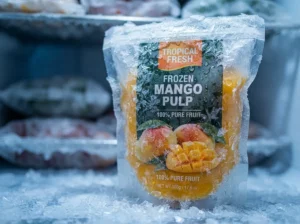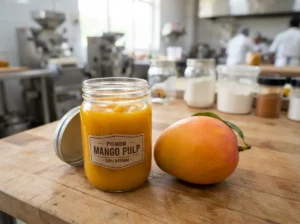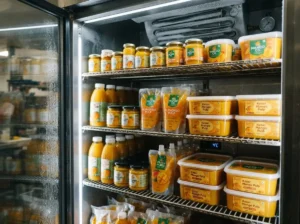

Do you truly understand what is frozen fruit pulp and what defines this processed fruit ingredient? More specifically, it consists of edible fruit portions that processors separate from peels and certain seeds before creating a uniform consistency. Producers then package and freeze the mixture, while its exact composition depends on the fruit, manufacturer, and ingredients the label identifies.
Recognizing what is frozen fruit pulp also means understanding that different products do not share identical formulations. Moreover, each brand adjusts ingredients and processing methods differently according to the specific fruit it handles. In addition, some products include added sugar or other ingredients that manufacturers declare directly on the product packaging. Therefore, always review the label or technical data sheet before purchasing any available product reference.
At this point, you can explore our fruit pulp in several varieties throughout our catalog for different operational needs. From there, continue reading to understand its production, contents, and differences from other fruit-derived products more thoroughly.
What is frozen fruit pulp: how producers make it
Understanding what is frozen fruit pulp represents only the first step toward knowing this versatile ingredient. Although every manufacturer follows its own process, most producers generally use several comparable production stages. However, no general explanation replaces the specific technical data sheet for each product reference.
Fruit selection and washing
First, the facility evaluates the ripeness and overall condition of every fruit batch that it receives. Additionally, the team checks each fruit batch’s consistency before accepting it for the production process. Consequently, workers immediately remove any units that fail the facility’s internal quality standards during this initial stage. Next, employees wash and sanitize the accepted fruit before moving it through subsequent transformation stages.
Pulping and separation of unused parts
In this context, verifying what is frozen fruit pulp clarifies why this stage plays such an essential role in production. More specifically, during pulping, processors carefully separate the usable fruit portion from every remaining natural component in the raw material.
At this stage, for example, teams remove peels, large seeds, or other parts according to each specific fruit. Ultimately, they seek a smooth, uniform texture suitable for the finished product that customers will receive.
Treatment, packaging, and freezing
Explaining what is frozen fruit pulp also requires describing the final stage of its transformation process. Accordingly, manufacturers may adjust formulas, apply heat treatment, package portions, and offer several commercial formats.
Afterward, teams freeze the product and maintain the cold chain until final delivery reaches the customer.
What does frozen fruit pulp contain?
Knowing what is frozen fruit pulp does not fully explain everything each product package contains. In fact, the pulp retains several natural components from the fruit portion that manufacturers process during production. However, the final composition varies according to the fruit, manufacturer, and specific production method each producer uses.
Can it contain sugar or preservatives?
Ultimately, the answer depends entirely on each specific product reference and its complete declared formulation details. Therefore, never assume that every frozen pulp contains only fruit or that every product always includes additives. Instead, before purchasing the product or formulating with it, carefully review the following essential information and documentation:
- Ingredient list. This section identifies any additional components that the selected product reference includes within its complete formulation.
- Nutrition facts. In turn, the table shows calories, sugars, and other nutrients that every listed serving provides to consumers.
- Added sugar declaration. This statement specifies whether the product contains sugar beyond the amount naturally present in fruit.
- Technical data sheet. Additionally, professionals can consult this document for the product’s composition, origin, and relevant physicochemical characteristics.
- Storage conditions. These instructions specify the required temperature and handling procedures after someone opens the original package.
Differences between pulp, puree, juice, nectar, and concentrate
Defining what is frozen fruit pulp becomes clearer when you compare it with similar products available throughout the market. Although consumers often confuse these categories, each one has distinct characteristics that require careful review. Therefore, this comparison matters before selecting an ingredient for a recipe, beverage, or production line:
| Product | General description | What to verify |
|---|---|---|
| Pulp | Processed edible portion of the fruit |
Ingredients, seeds, and texture |
| Puree | Fruit processed into a uniform consistency |
Sugar and refinement level |
| Juice | Liquid obtained from the fruit | Fruit percentage and ingredients |
| Nectar | Beverage formulated from fruit | Water, sugar, and fruit percentage |
| Concentrate | Product from which part of the water has been removed |
Dilution and formulation |
Are frozen fruit pulp and fruit puree the same?
Indeed, across international markets, these terms may overlap depending on the country, language, and brand using them. Therefore, manufacturer labels and detailed specifications provide greater reliability than an isolated commercial product name.
Consequently, this distinction becomes especially important when directly comparing several available product references with one another.
What can frozen fruit pulp be used for?
Clarifying what is frozen fruit pulp helps illustrate its many uses across kitchens and production facilities. Furthermore, this ingredient supports uniform beverages and chilled desserts without relying on seasonal fresh fruit availability.
- Juices. Teams prepare them by diluting the pulp according to proportions that each technical data sheet recommends.
- Shakes and smoothies. Similarly, they add body and natural flavor without requiring staff to peel or cut fresh fruit.
- Beverages with milk or plant-based alternatives. The pulp blends easily into dairy or plant-based preparations across many food service applications.
- Desserts and chilled preparations. Beyond beverages, this ingredient provides a versatile base for ice cream, frozen pops, mousses, and sauces.
- Fillings and toppings. These applications contribute appealing color and flavor to baked goods and assorted professional pastry products.
Nevertheless, each application depends on the specific formulation of the product reference you select and its intended commercial use. Therefore, always follow the proportions that the corresponding technical data sheet recommends for reliable results.
Applications for restaurants and industry
Clarifying what is frozen fruit pulp also means recognizing its role within larger-scale commercial operations. Accordingly, restaurants, hotels, and production facilities use this ingredient to standardize flavor, color, and yield across preparations. For example, food service teams commonly use it within the following daily professional and commercial applications:
- Standardized beverages. They allow teams to serve consistent flavor and color in every preparation without unwanted variation.
- Pastry preparations. Culinary teams incorporate the pulp into fillings, toppings, and several different types of baked mixtures.
- Bases for dairy products. These bases add fruit flavor to yogurts, ice creams, and other dairy preparations.
- Sauce production. Each option provides a practical base for sweet or sweet-and-sour sauces according to the selected recipe.
- Food product development. Development teams use the pulp for formulation testing before scaling production to larger commercial volumes.
Even so, remember that every recipe requires specific adjustments based on its intended final result and preparation method. Ultimately, the final formulation depends on the outcome each culinary or product development team wants to achieve. Moreover, suppliers that document their processes thoroughly help culinary teams maintain consistent results across separate production batches.
Frozen pulp vs. fresh fruit
Understanding what is frozen fruit pulp makes comparing its advantages against fresh fruit easier across different operational scenarios. However, neither option consistently provides the best solution for every possible recipe, application, or production requirement.
Instead, the right choice depends on the recipe, available space, and required volume for each operation.
| Criterion | Frozen pulp | Fresh fruit |
|---|---|---|
| Preparation | May arrive ready for portioning | Requires washing, cutting, or pulping |
| Waste | Generally lower during use | May generate peels and seeds |
| Portions | May follow standardized measurements |
Vary between individual units |
| Storage | Requires freezing | Depends on each fruit |
| Availability | Depends on frozen inventory | May vary by season |
| Texture | Processed and uniform | Retains its original structure |
Choosing between both options depends on the recipe, available storage space, and the texture the preparation requires. Additionally, the volume each operation requires and fresh fruit availability throughout every season also influence the final operational decision. Therefore, many kitchens and production facilities combine both options according to the preparation they currently develop.
How should you store and thaw the pulp?
Distinguishing what is frozen fruit pulp also requires understanding appropriate storage practices immediately after purchase. Accordingly, consider these general recommendations without replacing the specific instructions that the product packaging lists:
- Store the product at the temperature its packaging specifies without interrupting the necessary cold chain.
- Inspect the package carefully before storing it or using its contents within any food preparation.
- Avoid prolonged exposure to room temperature during transportation, temporary storage, or routine product handling activities.
- Thaw only the amount required for each preparation while keeping the remaining package contents frozen.
Additionally, always follow manufacturer instructions and use individual portions whenever the product packaging makes them available. Therefore, never assume that you can safely refreeze the product after completely thawing the entire package contents. Likewise, avoid using thawing methods that differ from the directions that the original label specifies.
Moreover, unopened shelf life and the usage period each manufacturer recommends after thawing vary considerably for every individual product reference. Therefore, always consult the expiration date, packaging, and corresponding technical data sheet before determining an appropriate usage period.
Ultimately, examining what is frozen fruit pulp closely helps you choose this practical ingredient more effectively. Additionally, this knowledge allows you to compare it confidently with several other available fruit-based options. Therefore, once you understand the topic, the next step involves learning where to buy frozen fruit pulp reliably for your operation.
You can review our frozen fruit pulp by available product reference, package size, and commercial presentation.
References
- Comisión del Codex Alimentarius. (2025). General standard for fruit juices and nectars: CXS 247-2005.
- Comisión del Codex Alimentarius. (2023). General principles of food hygiene: CXC 1-1969.