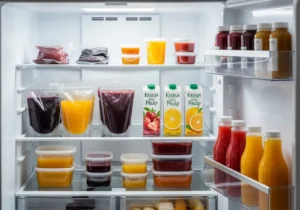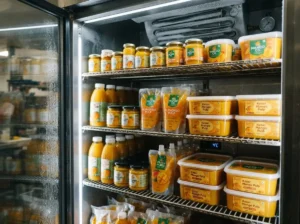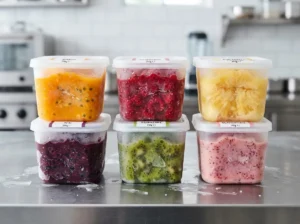

Buying frozen pulp today follows four clear routes, and each one serves a very different purchaser. In Colombia, you can find it at manufacturer stores, specialized distributors, supermarkets, and online marketplaces. Therefore, if you want to know where to buy frozen fruit pulp with technical backing, the producer’s store answers fastest. Alimentos SAS, moreover, gathers several flavors and package sizes together inside one single commercial category. Restaurants, hotels, cafés, distributors, and international buyers, by contrast, should open a formal quotation route instead.
Find available frozen fruit pulps here.
Where to buy frozen fruit pulp in Colombia
The local market offers several channels, and each one delivers a noticeably different level of service. A supermarket solves one occasional purchase, and yet it rarely goes beyond that single basic transaction. Meanwhile, a distributor widens the assortment, although it seldom explains the true origin of each batch. The manufacturer, by contrast, sustains a steady supply and hands over complete product documentation. For that reason, review these three points carefully before you commit to any single supplier:
- Who manufactures the pulp, and which certifications that plant currently holds.
- How the operation keeps the product frozen throughout the entire transport.
- What information appears on the label and inside the technical data sheet.
Direct purchase from the manufacturer
Buying at the source removes intermediaries, and it also removes most of your remaining doubts. In fact, the producer answers with verifiable data about every single reference in the catalog. Among the advantages that matter most to a professional buyer, the following five stand out clearly:
- Precise information about ingredients and any additives the plant adds.
- Access to technical data sheets for each individual flavor.
- Wide variety available within one single product line.
- Easy scheduling for recurring purchase orders.
- Direct commercial contact for volume negotiations.
Where to buy frozen fruit pulp online
Online buying works well whenever the seller explains its cold logistics clearly and with real transparency. Nevertheless, you should confirm several specific details on the product page before paying for anything:
- Real availability of the specific flavor you need.
- Delivery zone and realistic delivery times.
- Net weight of each package presentation.
- Price per kilogram, rather than price per bag.
- Cold transport conditions during the whole trip.
- Reception of the product while still fully frozen.
That last point deserves far more attention than most first-time buyers usually decide to give it. Pulp arriving soft has already lost part of its original texture and its expected yield. Consequently, the frozen fruit pulp category gathers all that information, reference by reference, for every buyer.
Where to buy frozen fruit pulp wholesale
Restaurants, hotels, cafés, juice bars, ice cream shops, and distributors buy under a completely different logic. They need continuity, stable pricing, and solid technical backing behind every single shipment they receive. Therefore, the commercial channel fits their operation far better than any ordinary retail alternative does.
Which frozen fruit pulps you can buy
A bare flavor list helps very little without context around recipes and real operating conditions. Buyers ultimately decide according to the recipe, the yield, and the specific flavor profile required. Grouped this way, however, the available options become considerably easier to understand and to compare:
- For juices and smoothies: mango, strawberry, blackberry, lulo, soursop, and passion fruit.
- Desserts, ice cream, and pastry work with references you choose by acidity, sweetness, and texture.
- Food service needs tropical fruits that stay hard to source fresh year-round.
That interest clearly does not behave like a passing seasonal trend inside the wider industry. Tropical and exotic fruits held nearly one third of the global puree market in 2023 (FreshFruitPortal, 2025). Furthermore, the whole category projects roughly 10.1 billion dollars in total value by 2035. Even so, actual availability still shifts with every harvest and with each production season. Always verify it inside the commercial category before you lock down any final recipe formulation.
Which frozen pulp format suits your purchase
The format ultimately defines daily work, whether inside a kitchen or across a production plant. Portioned pulp, for example, organizes the whole operation right from the very first order. Its practical benefits, meanwhile, show up quickly across several different parts of the daily routine:
- Simpler inventory control across every shift.
- Less handling of the product overall.
- Repeatable preparations during each service shift.
- Lower waste from unused leftover portions.
- Thawing of only the quantity you need.
A business, moreover, should compare net weight, portion count, and real yield per recipe. Afterward, look closely at freezer space, order frequency, and the required minimum purchase quantity. Cost per finished portion, ultimately, closes the comparison and settles the whole purchasing decision. A juice bar with a small freezer, for instance, gains more from frequent orders than from industrial formats.
| Buyer type | Recommended format | Main criterion |
|---|---|---|
| Household | Small portions | Ease of use |
| Café or juice bar | Portioned kilogram | Recipe control |
| Restaurant or hotel | Food service format | Recurring consumption |
| Distributor or industry | Commercial volume | Supply and logistics |
How to choose a frozen fruit pulp supplier
A good supplier answers quickly and always arrives with the supporting documents already in hand. Likewise, that partner sustains the very same quality level across one order after another. These four criteria, in practice, organize the decision and remove almost all of the guesswork:
- Ingredients: check whether the reference carries added sugar, water, or antioxidants. Confirm as well whether you want pulp, puree, concentrate, or nectar.
- Cold chain: verify storage, frozen transport, packaging condition, and the thawing instructions on the label.
- Technical sheet: request shelf life, storage conditions, format, sensory characteristics, and manufacturer details.
- Yield: calculate the real cost per finished beverage or per completed preparation.
That last point genuinely surprises many buyers during their very first serious cost comparison exercise. The cheapest bag does not always produce the cheapest glass at the end of service. Pulp carrying a higher fruit concentration simply yields more portions out of every single kilogram. Consequently, the real cost of each preparation drops noticeably without any loss of flavor intensity. Certifications, finally, close the analysis and confirm everything the supplier already claims on paper. Alimentos SAS works with ISO 22000, HACCP, KOSHER, and favorable concepts from INVIMA and the FDA.
Where to buy frozen fruit pulp in the United States
The United States market runs two parallel routes, and both serve very different buyer profiles. Retail comes first, and it stays intensely local from one neighborhood to the very next. Most common searches use terms such as frozen fruit pulp near me or frozen tropical fruit pulp. Shoppers also type latin fruit pulp and frozen fruit puree into the same search bar. Such queries are usually resolved inside Latin markets, international supermarkets, and dedicated frozen food aisles. Online stores, for their part, confirm shipping availability according to each ZIP code you enter. No chain, however, guarantees every single flavor at every one of its physical locations.
The second route covers wholesale and import, and it therefore demands considerably more preparation. Restaurants, beverage manufacturers, distributors, ice cream shops, and importers all operate inside this channel. Many of them first ask how to export frozen fruit pulp toward their own warehouse. That whole process depends on permits, complete documentation, and reliable cold logistics from origin onward. Such a buyer, therefore, should request the following items before signing any agreement at all:
- Catalog and the full list of available flavors.
- Package formats and the minimum order quantity.
- Technical data sheet and a product sample.
- Logistics conditions and a formal commercial quotation.
Market context, in addition, helps considerably during any serious price negotiation with a new supplier. North America holds the largest share of the global frozen fruit market (Mordor Intelligence, 2026). That same market, meanwhile, reached a total value of 5.02 billion dollars during 2025.
Frozen pulp versus fresh fruit
Neither alternative wins every single time, since the right answer changes with each specific operation. Your choice depends on the use, the required flavor, the freezer space, and monthly volume.
| Criterion | Frozen pulp | Fresh fruit |
|---|---|---|
| Preparation | Ready to portion | Requires cleaning and processing |
| Waste | Lower | Peels, seeds, and discards |
| Portions | Can follow a standard | Variable |
| Availability | Depends on frozen inventory | Can turn seasonal |
| Storage | Requires freezing | Depends on the fruit |
| Operation | Supports repeatable recipes | Greater natural variation |
Where to buy frozen fruit pulp according to your need
The final decision comes down to your own consumption scale and nothing much beyond that. Every profile follows its own route, and none of them demands lengthy paperwork or delays. In short, here is exactly how you can move forward with real confidence starting today:
- For households or single-unit purchases: review the frozen fruit pulp category and check flavors and weights.
- Restaurants, hotels, distributors, or industry should request a commercial quotation and review available formats.
Forty years producing pulps and nectars taught us something remarkably simple about this whole business. The best supplier is never the one promising the longest possible list of exotic flavors. Instead, it remains the one delivering the very same result across every single order placed. With that information in hand, buying stops being a gamble and becomes a business decision.
References
- Brewster, E. (2026). The new tropical fruit palette. Institute of Food Technologists.
- FreshFruitPortal. (2025). Global fruit puree market to reach $10B by 2035.
- FreshFruitPortal. (2026). Guava puree market set to nearly double by 2036.
- Mordor Intelligence. (2026). Fruit concentrate market: Analysis, share & size.
- Mordor Intelligence. (2026). Frozen fruits market size & share analysis.